When enquiry volume grows, sales teams need a way to decide which conversations to prioritise. A long form or rigid script can create friction, while no shared criteria can leave every representative making a different call.
A lightweight qualification approach records only what helps the next person make a relevant, respectful response.
A practical perspective
Agree what a good-fit enquiry means
Translate the service’s real boundaries into clear criteria: the problem the team can solve, the regions it serves, the kinds of organisations it supports, and any timing or capacity constraints.
Separate essential fit from useful context. Avoid rejecting a request solely because one optional detail is missing; use the first conversation to clarify uncertainty.
A practical perspective
Ask questions in the order the conversation needs
Begin with the customer’s goal and immediate question. Then ask only for details that change the recommendation or next step. Explain why sensitive or business-critical information is needed.
A qualification framework is a guide, not a script to impose. Let the person explain their situation and record their own language where it helps the hand-off.
A practical perspective
Make the next step visible
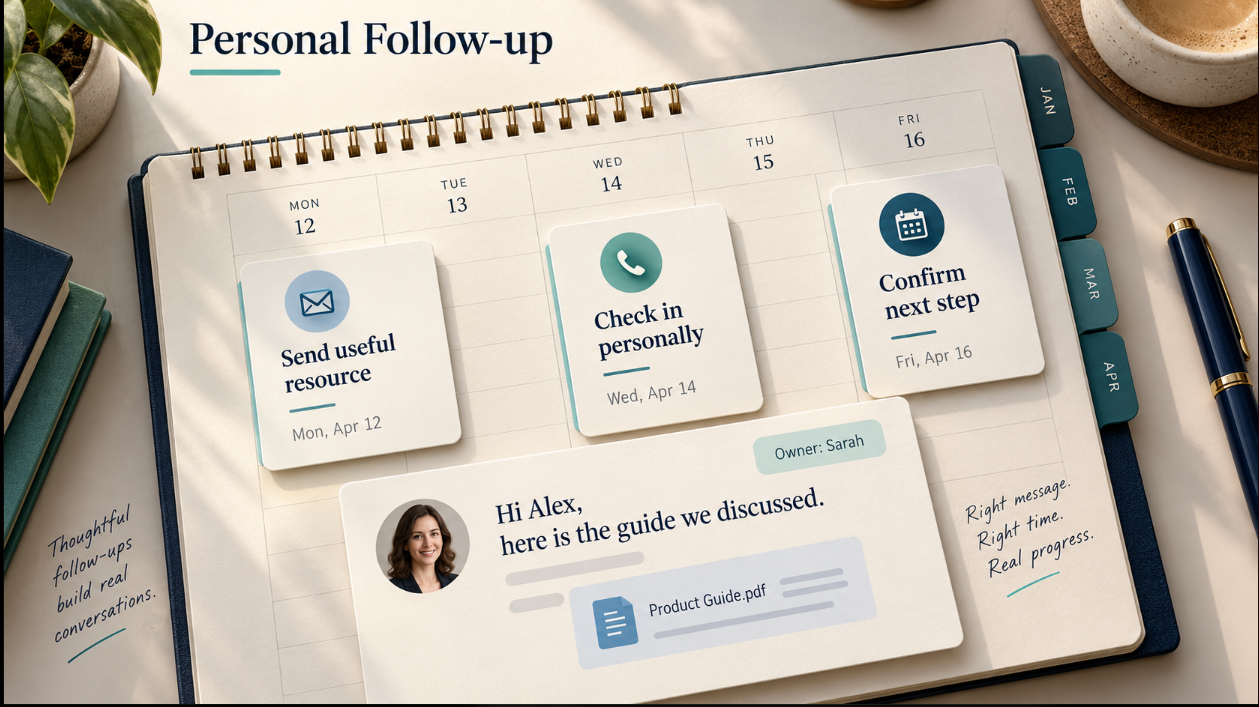
Record the owner, agreed follow-up, and timing in the system the team uses. If a lead is not currently a fit, explain the reason and any appropriate alternative rather than leaving the person without context.
Review qualification outcomes with the team. If many enquiries are consistently out of scope, check campaign targeting and page expectations as well as sales handling.
Put the insight to work
Practical next steps
- 01
List service boundaries
Write down fit, location, availability, and scope criteria that the business can apply consistently.
- 02
Choose essential questions
Keep only the questions that inform fit or the next useful action.
- 03
Assign the follow-up owner
Record who responds, what they will do, and where the activity is tracked.
- 04
Review outcomes
Compare accepted, deferred, and unsuitable enquiries to improve both targeting and process.
Key takeaways
Keep the next decision clear.
- Keep qualification criteria short, explicit, and grounded in real service boundaries.
- Treat the first interaction as a conversation rather than a form-filling exercise.
- Use outcomes to improve both lead handling and upstream marketing.